// Challenge
Critical work. Too much manual process.
Inspectors captured photos and observations on site, then turned those findings into reports afterwards. The process took time and created unnecessary room for error in work where accuracy matters.
The challenge wasn't simply to digitise the paperwork. It was to remove it without getting in the way of the inspector.

// Approach
Put intelligence where the work happens.
We designed the experience around the inspection itself. AI handles the work technology does well, while the inspector stays in control of the assessment.
- Voice-first field reporting: Integrated OpenAI’s Whisper model for highly accurate speech-to-text reporting, allowing inspectors to dictate complex findings hands-free while on-site.
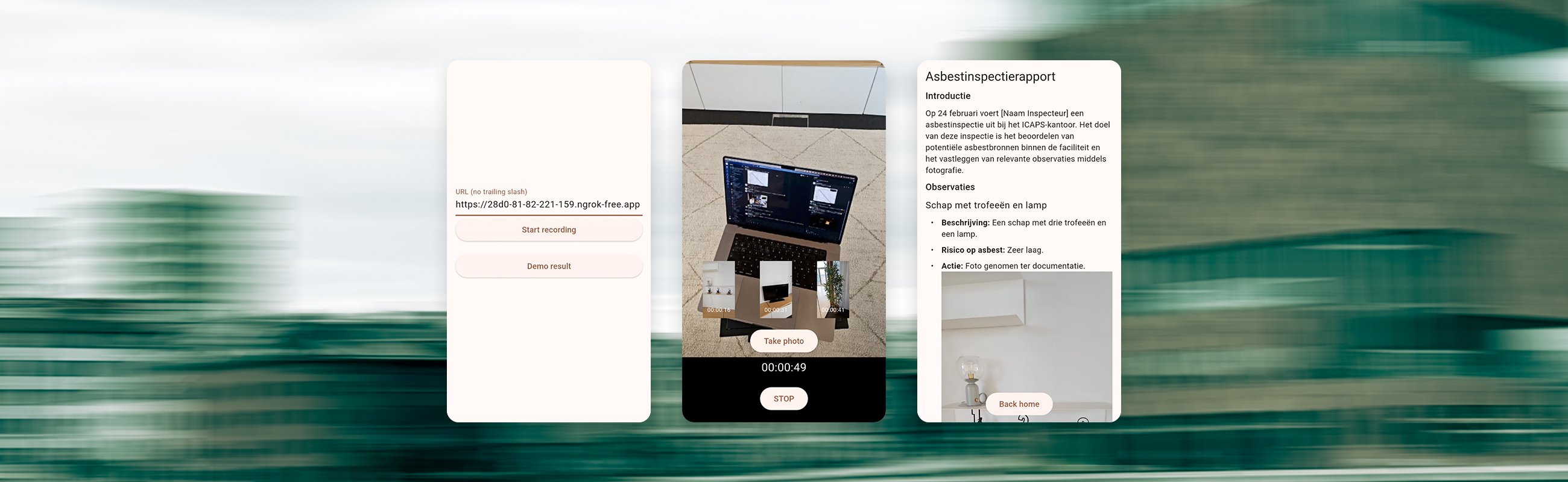
- Automated image classification: Implemented computer vision models to automatically analyse photos, identify potential asbestos hazards, and classify risk levels in real time.
- Paperless mobile workflow: Replaced manual documentation with a streamlined digital app that synthesises voice notes and visual data into compliant inspection reports automatically.
- Cross-industry scalability: Architected the underlying platform to be adaptable beyond asbestos, establishing a versatile framework suitable for broader construction safety and compliance audits.
// Result
From inspection to report. In the field.
The platform removes much of the administrative work surrounding an inspection. Findings are captured as the work happens. Reports are generated from structured field data. AI assists with visual analysis.
The result: inspection times reduced by more than 50%, with less paperwork and a more consistent inspection process.
"The real opportunity wasn't adding AI to an inspection. It was understanding where intelligence could remove work without taking judgement away from the inspector.”
- Maarten Anckaert, Innovation manager at SumZero
// Impact
- >50% faster inspections: less time spent capturing and processing information.
- Less administration: reporting moves into the field instead of happening afterwards.
- More consistent assessments: AI-assisted classification supports inspectors in evaluating visual findings.
- Ready to expand: the same foundation can support other inspection and compliance workflows.